Health, Education, and Human Services Committee urges action on superintendent vacancy and Navajo school reforms | News
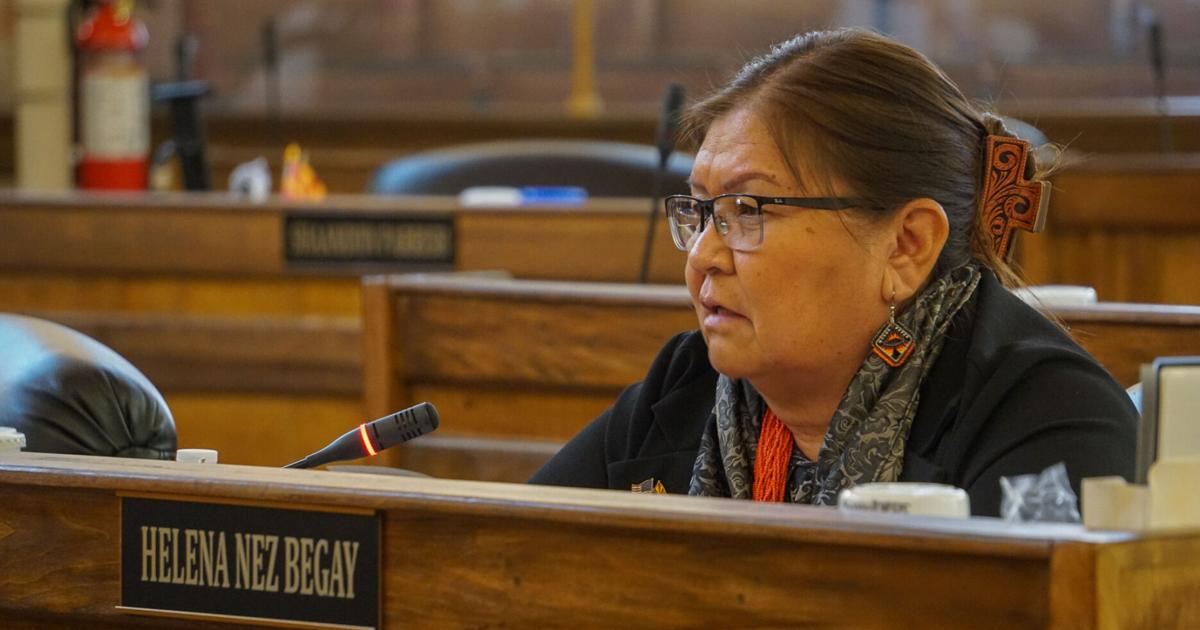
The Navajo Nation Council’s Health, Education, and Human Services (HEHSC) Committee convened during a special meeting Feb.19 in Window Rock, Arizona, to address the ongoing vacancy of the Superintendent of the Department of Diné Education (DODE) and the critical need for school accountability reforms.
Committee members voiced deep frustration over delays in appointing a permanent superintendent, citing bureaucratic inefficiencies and governance challenges as barriers to meaningful progress. They underscored the urgent need for leadership that can bring stability to Navajo schools while advancing long-overdue education reforms.
“Our children’s education is at stake,” said HEHSC Vice Chair Germaine Simonson. “We cannot afford any more delays in appointing a superintendent who will take responsibility for improving our schools”.
Delegate Dr. Andy Nez called for clarification to determine the authority to select the superintendent for the Department of Diné Education. This authority is vested in the Navajo Nation Board of Education and the selection is then forwarded to the Navajo Nation Council for confirmation. Nez raised the concern that the inconsistencies of appointing a permanent and qualified superintendent is felt doubly among all schools.
Key issues highlighted during the meeting included the current salary for the position does not reflect the level of expertise required to oversee a complex, multi-jurisdictional education system, making it difficult to attract qualified candidates.
Committee members questioned whether the DPM’s involvement is unnecessarily stalling the process, given that Navajo law grants the Board of Education the authority to make the appointment. Despite this clear authority, the position remains unfilled, causing disruptions in education oversight and reform efforts.
The HEHSC Committee stressed the need for immediate action on school accountability. Data shows that many Navajo Nation schools continue to underperform in state and federal assessments, raising concerns about the effectiveness of current policies. The committee reaffirmed its commitment to enforcing stronger academic standards while incorporating culturally relevant education through the Diné School Accountability Plan. The committee discussed accelerating efforts to transition schools to tribal control under Public Law 93-638, which would allow for greater self-determination in curriculum and resource allocation. The transition to tribal governance would enable leaders to shape educational policies that better reflect the needs of Diné students rather than adhering to rigid federal and state mandates.
Committee members stressed that there must be a robust investment in leadership development and capacity-building programs to cultivate qualified administrators from within the Nation. By strengthening professional development initiatives, the committee aims to create a sustainable pipeline of Navajo educators who are committed to long-term school improvement.
The HEHSC Committee called for a reevaluation of the organizational structure of the DODE to address inefficiencies, improve resource distribution, and eliminate unnecessary bureaucratic obstacles. Members voiced concerns that systemic dysfunction within the department has stalled essential reforms, leaving schools without the necessary support to push academic progress.
“If we do not take control of our education system now, we will continue to see high dropout rates, underprepared graduates, and a widening achievement gap,” Delegate Helena Nez Begay said. “We need strong leadership, decisive policy changes, and a commitment to excellence in every Navajo school.”
Several committee members raised concerns that the current governance structure lacks clarity and oversight, contributing to ongoing challenges.
“For too long, education reform has been stuck in political and bureaucratic limbo,” Delegate George Tolth said. “We must be bold and rethink how we structure our education system to serve our students, not just maintain outdated policies.”
The HEHSC Committee has scheduled a follow-up meeting on March 18 to further discuss the superintendent selection process and potential legislative reforms.
Information from NNC
“We need the voices of our communities at the table,” Vice-Chair Germaine Simonson said. “Education is not just a government issue; it’s a family and community issue. We need everyone’s input to create a system that lifts our students up.”
link