New Data Reveals China and Russia’s Growing Military Diplomacy Footprint in Latin America and the Caribbean
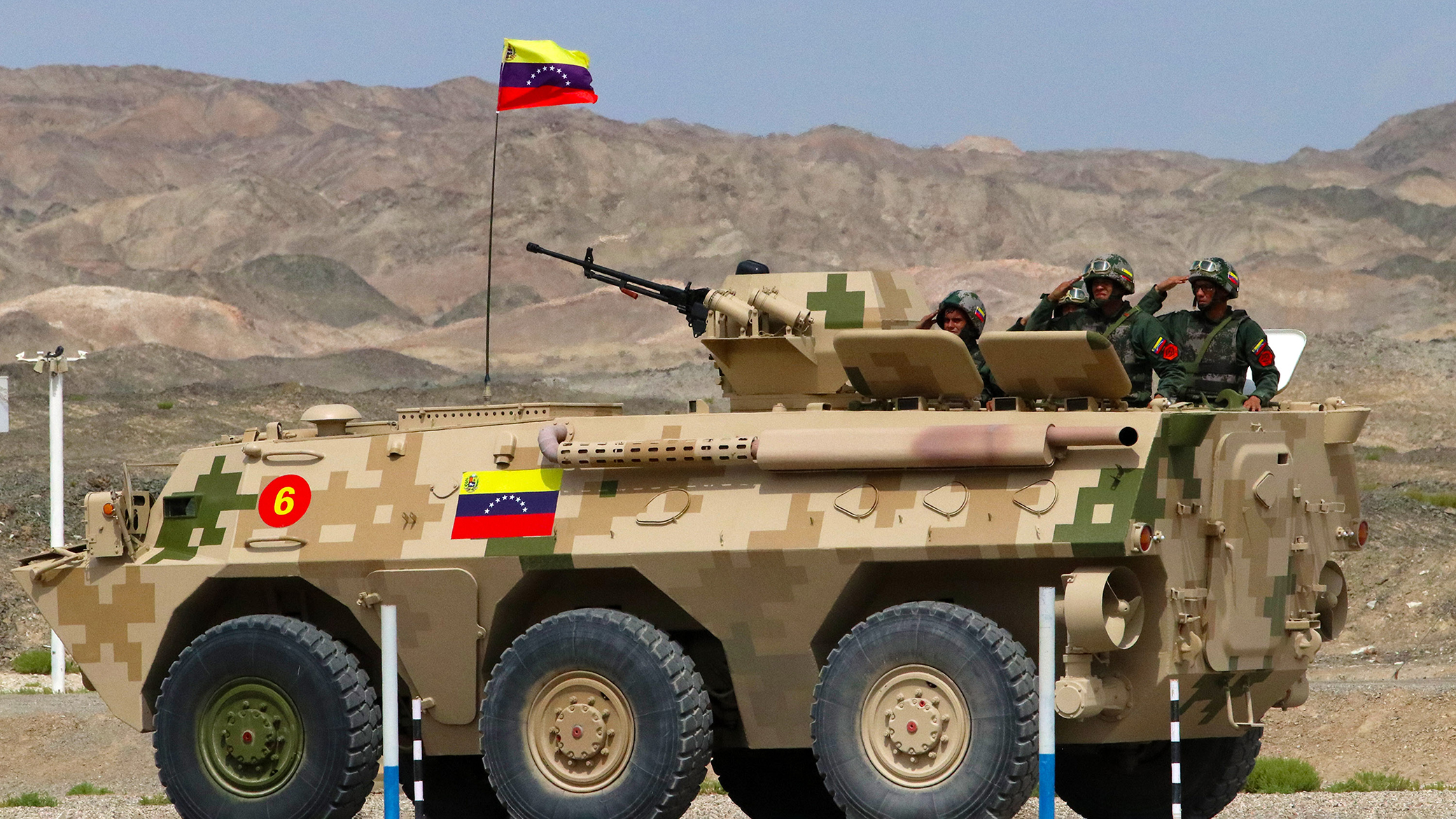
Russia’s military influence reemerged in LAC beginning in the early 2000s, as part of the “Primakov Doctrine,” which posited that Russia should level the playing field by inserting itself into the U.S. sphere of influence as reciprocity for U.S. policy in Eastern Europe. While China has been relatively cautious with the deployment of military assets in the region, Russia has been more willing to deploy assets in LAC, sometimes in a very ostentatious manner, and often as retaliation for perceived U.S. escalations. In 2024, Moscow sent warships to the Western Hemisphere on not one but two occasions, including deploying a nuclear-capable submarine with hypersonic missiles in Cuba and two nuclear-capable bombers dispatched from Moscow to Venezuela in 2018. Despite ambitions for a broader regional agenda for defense cooperation, Russia often focuses chiefly on cooperating with historical Cold War–era allies Nicaragua and Cuba, as well as Venezuela.
However, since the outbreak of Russia’s full-scale invasion of Ukraine in 2022, military diplomacy has become a more strategic tool to sustain military cooperation with LAC. Not only does Russia have a lower capacity to supply weapons to the region, but the sanctions placed on Russian imports have also undercut the consumer base for Russian weapons systems. The technical-military partnerships sustained by Soviet legacy weapons also seem to be facing increasing challenges, as some LAC countries begin exploring—though not always finalizing—deals to trade Soviet era equipment with the United States for important upgrades.
Between 2022 and 2025, Russia regularly received students from historical allies in its military academies, such as the Tyumen Higher Military Engineer Command School and the Mikhailovskaya Military Artillery Academy. Russia also signed new agreements strengthening military education exchanges with Nicaragua and Venezuela.
Although high-level meetings between Russia and LAC were not as frequent as those between China and LAC, bilateral meetings have included ministers of defense of Venezuela, Bolivia, Brazil, the Bolivian chief of armed forces, the general inspector of the Nicaraguan Army, Russia’s minister of defense, and the vice-minister of defense.
Nonetheless, the diplomatic tool that has stood out the most in Russia’s military diplomacy with LAC is its soft power activities. Russian military delegations have appeared at Mexico’s and Venezuela’s Independence Day parades, and Mexico’s Heroico Colegio Militar’s 200th anniversary. Russia has also attracted delegations from LAC countries to attend the Army Forum—a flagship annual defense exhibition aimed at showcasing the country’s innovations in its defense industry.
Unsurprisingly, the countries with which Russia has the most frequent exchanges in LAC are Nicaragua and Venezuela, followed by Cuba. During the course of three years, Russia and Nicaragua signed two major agreements on defense cooperation, including one long-term agreement signed for a term of five years (with a clause on automatic extension) aimed at increasing engagements, and high-level meetings have included top defense and military officials: Russia’s former minister and deputy minister of defense, Sergey Shoigu and Alexander Fomin, commander in chief of the Nicaraguan Armed Forces, Julio César Avilés Castillo, and Marvin Corrales, the inspector general of the Nicaraguan Army.
In 2022, during the visit of Russian Deputy Prime Minister Yuri Borisov, President Maduro pledged that the two countries had entered a new era of military cooperation. In the last three years, high-level engagements have included Russian Vice Minister of Defense Alexandr Fomin, Venezuelan Colonel General Renier Enrique Urbáez Fermín, and Defense Education Vice Minister Omar Enrique Pérez La Rosa. On the education front, Venezuelan cadets have studied at Russia’s elite Tyumen Higher Military Engineer Command School, specializing in advanced ground force technologies like drones, robotic systems, and remote mining. Russia’s sponsorship of the International Army Games also serves as an opportunity to showcase its capabilities and reinforce ties. Russian allies in LAC have even had opportunities to host parts of these games, such as Venezuela, which ran the Sniper Frontier 2022 competition.
An interesting case is the exchanges between Russia and Ecuador. In January 2024, President Daniel Noboa announced that Ecuador would transfer several pieces of Russian-made equipment to the United States to be repurposed in Ukraine. Russia retaliated with the decision to ban imports of bananas from Ecuador, which led President Noboa to call off the arms transfer. Despite this rift, military exchanges between the two countries continued apace. In August 2024, delegations from the Ecuadorian Army participated in the “Climbing for Peace on Mount Elbrus” event hosted by Russia’s International Military Sports Council. The Embassy of Ecuador in Moscow also invited Russian military officials to join defense attaches in the celebration of the 203rd anniversary of the Battle of Pichincha earlier this year.
Remaining the Preferred Partner
Russia’s military diplomacy remains far short of U.S. influence in LAC, and it seems to be ebbing, given that Russia recently cancelled the Army Expo 2025. Nonetheless, in light of the new agreements (both formal and rhetorical ones) with Nicaragua and Venezuela, Russia’s military diplomacy is likely to remain in at least part of the region and could pave the way for further military cooperation.
China’s military diplomacy appears to surpass the United States in key areas already. As mentioned, the number of LAC students enrolled in Chinese military colleges was already more than five times higher back in 2020—an area where China has been outpacing the United States since 2015, following the first China-Latin America High-Level Defense Forum (a sub-forum of China-CELAC forum). China has also been attracting more cooperation through pioneering initiatives in non-traditional security issues, such as the China-LAC Military Medicine Forum.
More concerning still is that under the framework of China’s Global Security Initiative, Chinese military diplomacy is poised to expand significantly in the coming years. In particular, China’s fusion of international security concepts—blurring the lines of security and military cooperation, and masking military activity under the emphasis of nontraditional security issues such as emerging technologies, climate change, and health—broadens the definition of defense beyond conventional military affairs and subtly expands the scope of permissible cooperation.
While Chinese and Russian military diplomacy currently operates primarily as a soft power tool and has yet to translate into tangible threats to U.S. military influence in the region, the United States should not underestimate its long-term consequences. For now, Washington remains the preferred defense partner for many LAC countries. However, the United States must do more to preserve this advantage, as well as minimize opportunities for China and Russia to leverage military diplomacy into more arms sales, status of forces agreements, or basing in the region. Fully funding and expanding billets for regional officers at U.S. defense colleges is one way the United States can continue to ensure it is shaping the next generation of military leaders. Working with Major Non-NATO Allies like Argentina, Brazil, and Colombia to streamline arms procurement processes and encourage greater interoperability with U.S. forces can help to minimize the appeal of Beijing or Moscow’s offers. Finally, to effectively compete with China’s eagerness to lead in nontraditional security issues, doubling down on historic humanitarian assistance and disaster response efforts where the United States’ geographic proximity to the region offers it a natural leg up should be an area for continued focus.
Ryan C. Berg is director of the Americas Program and head of the Future of Venezuela Initiative at the Center for Strategic and International Studies (CSIS) in Washington, D.C. Christopher Hernandez-Roy is the deputy director and senior fellow of the Americas Program at CSIS. Jessie Hu is an intern with the Americas Program at CSIS. Henry Ziemer is an associate fellow with the Americas Program at CSIS.
link