Waikato Partners With Regional Health Education Experts To Shape Med School Curriculum

The University of Waikato will partner with experts in
rural and regional health education from the University of
Wollongong to help shape the curriculum for the New Zealand
Graduate School of Medicine.
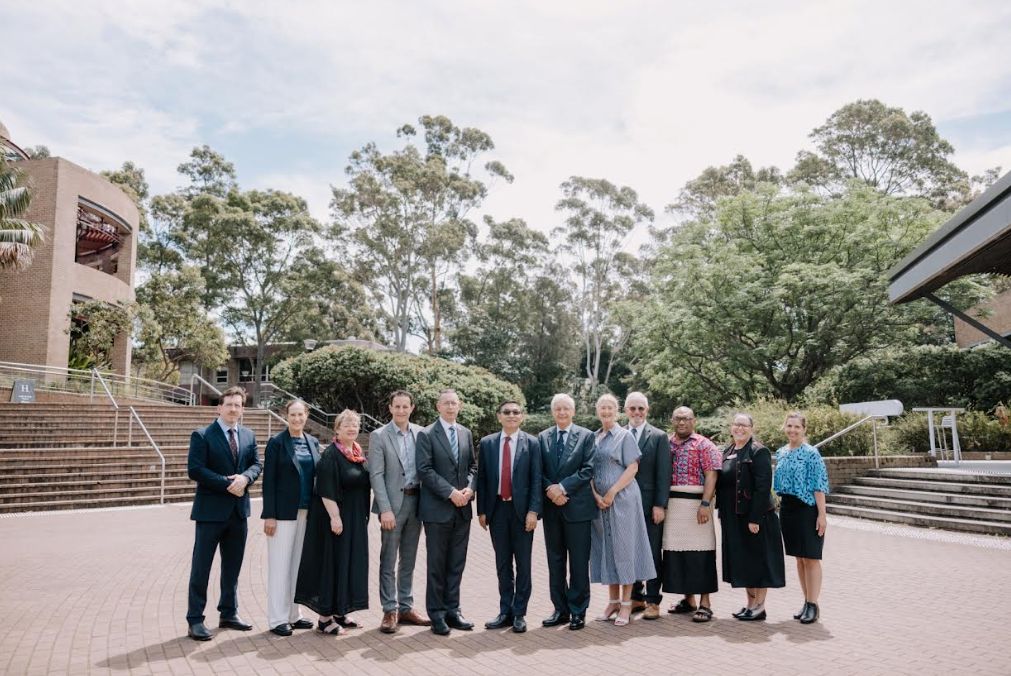
Professor David McCormack (Interim Dean of Medicine,
Division of Health, Waikato), Professor Sandra Kemp (Acting
Dean, Graduate School of Medicine, Wollongong), Senior
Professor Eileen McLaughlin (Executive Dean, Faculty of
Science, Medicine and Health, Wollongong), Professor Jo Lane
(Pro Vice-Chancellor Health, Waikato), Professor Neil
Quigley (Vice-Chancellor, Waikato), Professor Max Lu
(Vice-Chancellor and President, Wollongong), Michael Still
(Chancellor, Wollongong), Alissa Patison (Executive Manager,
Faculty of Science, Medicine and Health, Wollongong),
Professor Joe Chicharo (Deputy Vice-Chancellor Growth &
Global, Wollongong), Dr Sione Vaka (Associate Dean Pacific,
Division of Health, Waikato), Anna Tiatia Fa’atoese Latu
(Associate Dean Maori, Division of Health, Waikato), Belinda
Smith (Operations Manager Graduate School of Medicine,
Wollongong). (Photo/Supplied)
On
Friday representatives from Waikato and Wollongong signed an
MOU formalising the collaboration, which will draw on
Wollongong’s experience in regional medical education to
develop the programme for Waikato’s newly approved medical
school.
Advertisement – scroll to continue reading
Established in 2007, the University of
Wollongong’s Graduate School of Medicine has a proven
track record of educating doctors to work in regional and
rural communities, which has helped address critical health
workforce shortages in Australia.
University of
Waikato Pro Vice-Chancellor Health Professor Jo Lane says
Wollongong’s outstanding record of medical workforce
outcomes makes it a natural partner for the New Zealand
Graduate School of Medicine.
“Wollongong has
demonstrated that it is possible to design a medical
programme that changes where and how doctors choose to
practise,” Professor Lane says.
“Their experience
gives confidence that we can achieve similar results in New
Zealand, creating a programme that meets the needs of our
communities.”
Graduate-entry medical programmes,
which require students to already hold a bachelor’s
degree, have proven to be highly successful in targeting
areas with specific need, such as rural and primary care
shortages.While they are the most common model of medical
education in Australia, the New Zealand Graduate School of
Medicine will be New Zealand’s first graduate-entry
medical school.
New Zealand Graduate School of
Medicine staff will collaborate with Wollongong’s medical
programme staff to support the development of an innovative,
digital-first medical curriculum that is responsive to
community needs and designed to strengthen primary care and
rural health workforce outcomes, while advancing health
equity.
Data from the Medical Deans of Australia and
New Zealand Medical Schools’ Outcomes Database shows
Wollongong medical graduates are 1.5 times more likely to
work in rural or regional areas and 1.8 times more likely to
specialise in general practice when compared to graduates
from all Australian medical schools.
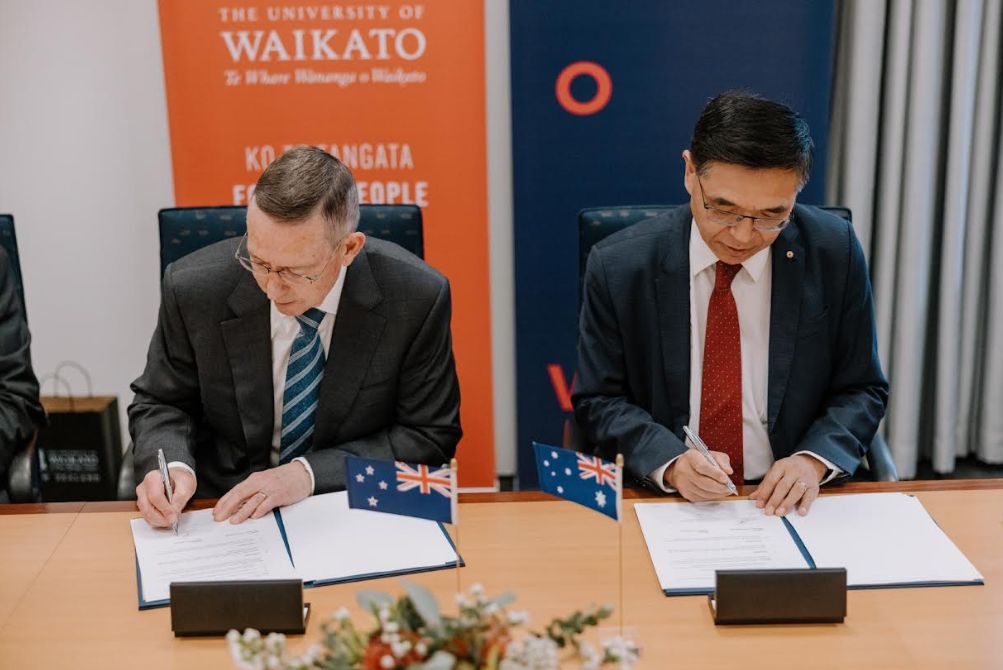
of Waikato Vice-Chancellor Professor Neil Quigley and
University of Wollongong Vice-Chancellor and President
Professor Max Lu
(Photo/Supplied)
University of
Wollongong Vice-Chancellor and President Professor G.Q. Max
Lu AO says the partnership reflects Wollongong’s global
outlook and its success in addressing health workforce needs
in regional and rural communities.
“At the
University of Wollongong we believe in thinking local,
acting global and creating impact through genuine
partnership,” Professor Lu says.
“Our rural
medical programme model being deployed at Waikato is a proud
moment. Our universities share a mission to strengthen the
health workforce and improve primary care in regional and
rural communities, and we look forward to seeing a similar
positive impact in New Zealand.”
In July,the
University of Waikato received the Government’s support
for its plans to develop New Zealand’s first
graduate-entry medical school, set to open in
2028.
© Scoop Media
link